Jonas Lang · 12 November 2026
Digital Platforms and Skill Workshops Converge to Transform Pathway Learning Experiences
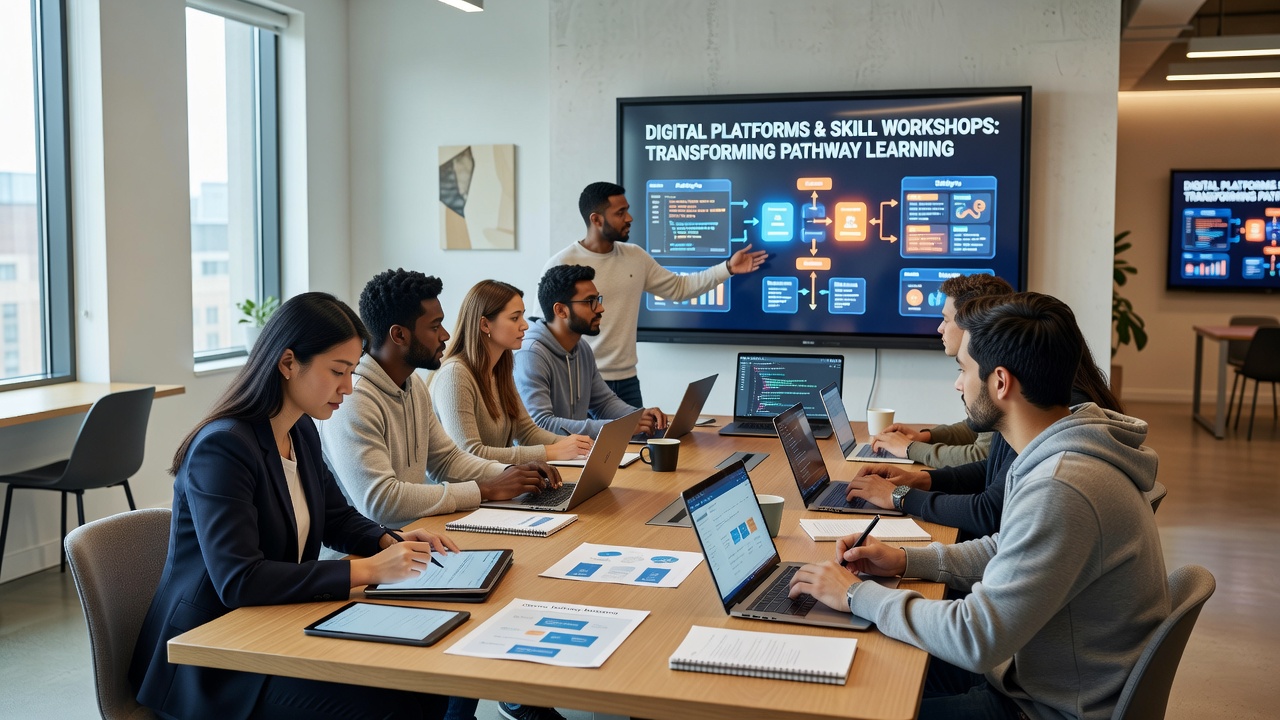
Pathway learning experiences have undergone notable shifts as digital platforms merge with structured skill workshops, creating environments where theoretical instruction meets hands-on application across multiple educational settings. Data from various institutions indicate that these combined approaches support students in building competencies that align with evolving workforce demands, and researchers at multiple universities have documented increased engagement when learners access both virtual resources and in-person or hybrid workshop formats simultaneously.
Expansion of Digital Platforms in Educational Pathways
Digital platforms now deliver modular content that students navigate at their own pace, while analytics tools track progress and highlight areas requiring additional support, according to reports compiled by international education organizations. In regions spanning North America and Europe, institutions report that platform adoption has risen steadily since 2023, with enrollment in pathway programs utilizing these tools showing measurable gains in completion rates when compared to traditional lecture-based models. Observers note that features such as adaptive assessments and collaborative online spaces allow participants to connect with peers and instructors regardless of geographic location, and this connectivity proves especially useful in cross-border programs where faculty exchanges introduce diverse perspectives into the curriculum.
Evidence gathered through longitudinal studies reveals that students who engage regularly with these platforms demonstrate stronger retention of core concepts, particularly when platform interfaces incorporate multimedia elements that illustrate complex processes. Government agencies in Australia and Canada have published summaries indicating similar trends, with data showing that digital integration correlates with improved transitions from preparatory courses into degree programs.
Skill Workshops Enhancing Practical Competencies
Skill workshops complement digital resources by emphasizing direct practice in areas such as communication, technical problem-solving, and project management, and facilitators design sessions that build upon content delivered through online modules. Participants often rotate through stations equipped with both physical tools and digital simulations, allowing them to test knowledge in controlled scenarios that mirror real-world conditions. Those who have examined outcomes in pathway initiatives across Asia and the European Union point to workshop formats that incorporate peer feedback loops, which researchers link to heightened confidence among learners preparing for advanced academic or professional stages.
Figures from educational ministries in several countries reveal that programs blending workshops with digital access report higher rates of skill certification attainment, and this pattern holds across diverse student demographics. Workshops scheduled at key intervals during pathway sequences provide opportunities for reflection, where individuals review platform-generated performance data and adjust their approaches before advancing to subsequent modules.
Convergence Patterns Observed in Recent Implementations
Multiple pathway programs now schedule workshop series that align directly with digital platform milestones, creating a rhythm where learners complete online modules and then apply findings in group activities or individual projects. One implementation tracked by academic researchers involved students from varied national backgrounds who accessed shared digital repositories before attending intensive workshop blocks focused on intercultural collaboration techniques. Results documented in peer-reviewed publications show that such sequencing supports smoother progression through transitional curricula, and institutions note reduced dropout occurrences when these elements operate in tandem.
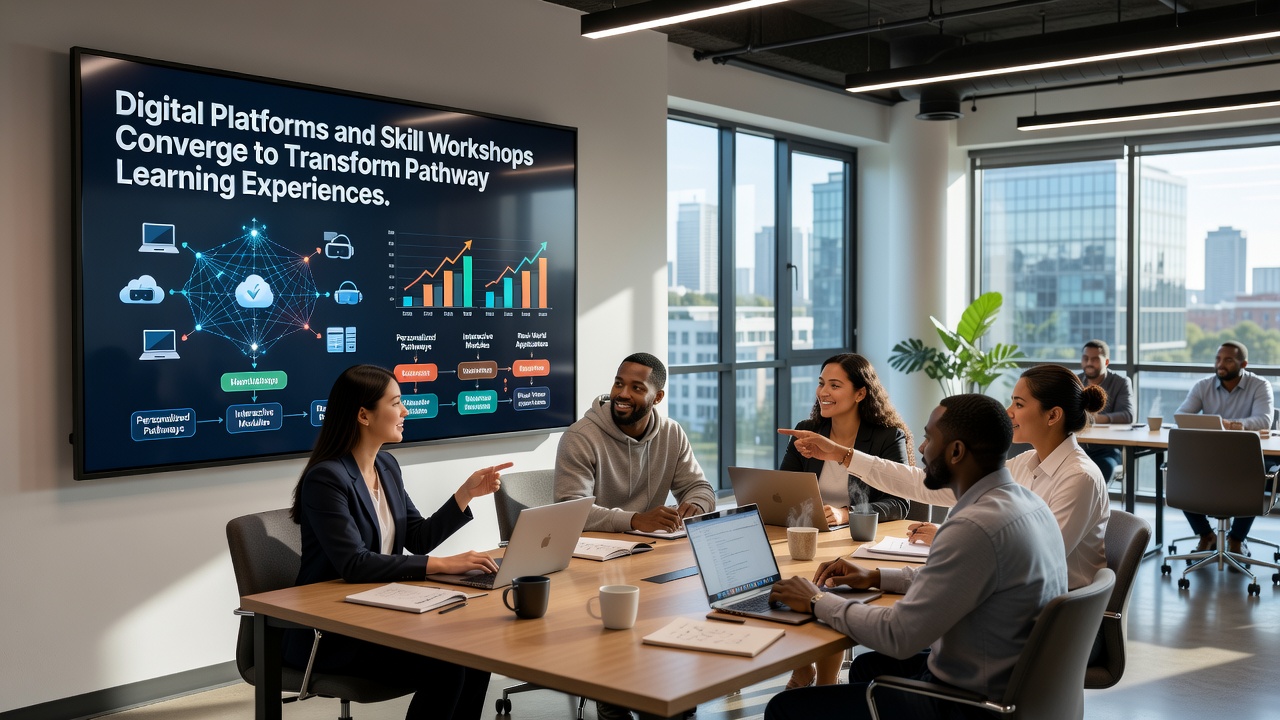
Additional examples from North American community colleges demonstrate how platforms host pre-workshop preparation materials that participants review independently, while follow-up sessions use workshop time to address questions emerging from those materials. Industry reports compiled by research institutions highlight that this model accommodates different learning preferences without requiring extensive customization, and data collected through standardized evaluations indicate consistent gains in both technical and soft skill metrics.
Developments Anticipated Around November 2026
Analysts project that updated datasets scheduled for release in November 2026 will provide further clarity on the long-term effects of these converged models, particularly as more pathway programs incorporate emerging technologies such as virtual reality components within workshops. Educational oversight bodies in the United Kingdom and New Zealand have signaled plans to expand tracking mechanisms that capture both platform usage statistics and workshop attendance records, and preliminary outlines suggest these combined metrics will offer clearer pictures of student trajectories. Researchers anticipate that the forthcoming information will help refine scheduling practices, allowing programs to optimize the timing between digital content delivery and hands-on activities.
Current planning documents from several international consortia indicate ongoing efforts to standardize evaluation frameworks that assess the combined impact, and these frameworks draw on existing studies from multiple continents to establish baseline comparisons. Observers expect November 2026 releases to include regional breakdowns that illustrate how convergence performs under varying resource conditions.
Conclusion
Digital platforms and skill workshops continue to intersect in ways that reshape pathway learning by linking flexible online access with structured practical sessions, and available evidence points to sustained interest from institutions seeking to strengthen student outcomes. As additional data emerges, particularly around the projected November 2026 updates, stakeholders will gain further insights into effective integration strategies across global contexts. Programs that maintain alignment between these components position participants to navigate academic and professional transitions with greater preparation, supported by the measurable patterns documented in current records from diverse sources.