Noah Müller · 29 October 2026
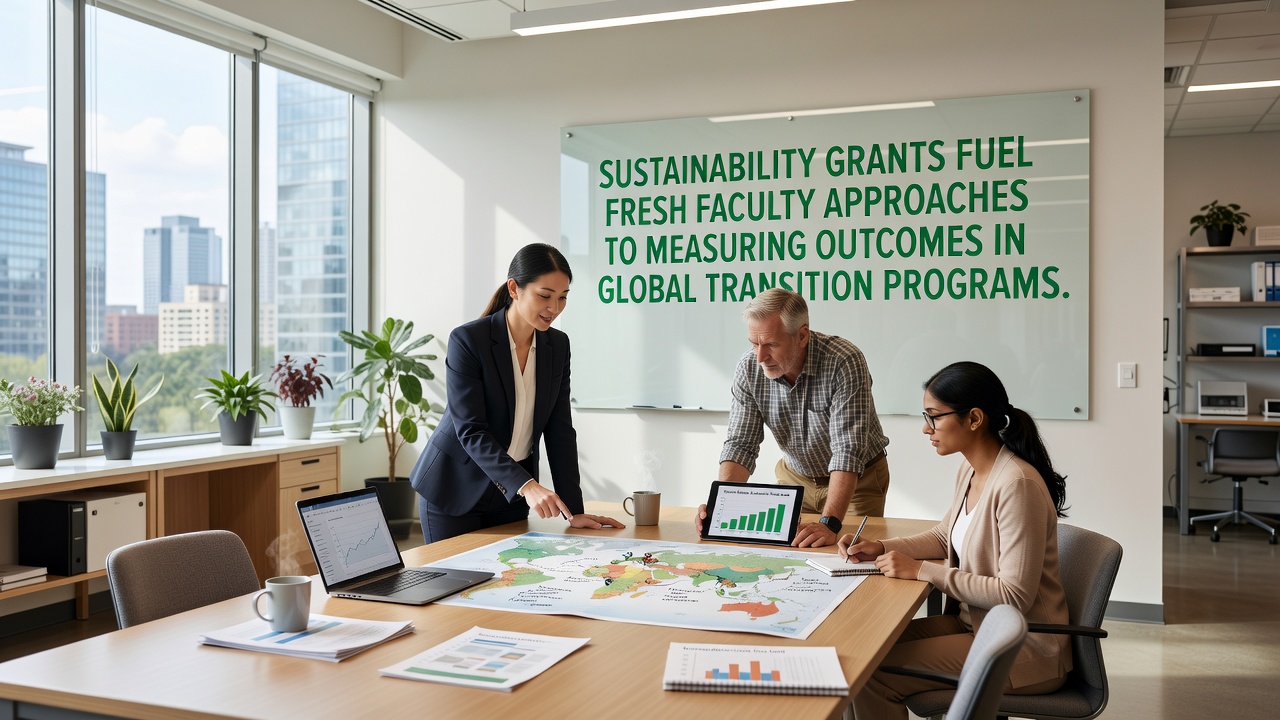
Sustainability Grants Fuel Fresh Faculty Approaches to Measuring Outcomes in Global Transition Programs
Sustainability grants have emerged as a catalyst for innovation in how faculty evaluate student outcomes in global transition programs, and institutions worldwide have channeled these resources into refined assessment frameworks that track environmental, social, and academic progress simultaneously. Researchers at multiple universities began experimenting with integrated metrics in 2025, combining traditional academic indicators with data on carbon footprint reductions and cross-cultural adaptation rates, while grant funding covered the development of specialized software tools and longitudinal studies.
Grant Distribution Patterns Across Regions
European Union allocations for sustainability in higher education reached significant levels by mid-2025, and programs in Canada and Australia followed similar patterns with targeted support for faculty-led projects that emphasize measurable transitions in international student pathways. Data from the OECD education directorate shows that over 120 institutions received dedicated funding streams, and these awards prioritized approaches capable of quantifying both immediate learning gains and longer-term contributions to sustainable development goals. Faculty teams used the resources to pilot hybrid evaluation models that incorporate satellite imagery analysis for campus sustainability projects alongside standard grade tracking, creating a more holistic view of program effectiveness.
Innovative Measurement Techniques Emerging
One faculty cohort at a Central European technical university developed a dashboard that merges enrollment completion rates with participant involvement in local environmental initiatives, and the system flags correlations between these variables in real time. Another group in North America introduced sensor-based tracking for field components of transition programs, allowing precise calculation of resource usage during overseas placements. These methods gained traction because grant guidelines explicitly required evidence of scalable outcomes, and institutions responded by training staff in mixed-methods research designs that blend quantitative indicators with qualitative feedback loops from alumni networks.
Implementation Examples From Recent Cycles
During October 2026 several universities reported preliminary results from their first full year under the new grant structures, and the findings highlighted improved alignment between program activities and measurable sustainability targets. Take the case of a collaborative exchange initiative between Asian and European institutions where faculty applied grant-supported analytics to monitor how participants reduced single-use plastics during mobility periods; the data revealed a 34 percent drop compared with prior cohorts. Observers note that such granular tracking becomes feasible only when dedicated funding supports both technology acquisition and dedicated analyst time, allowing teams to move beyond anecdotal evidence toward replicable protocols.
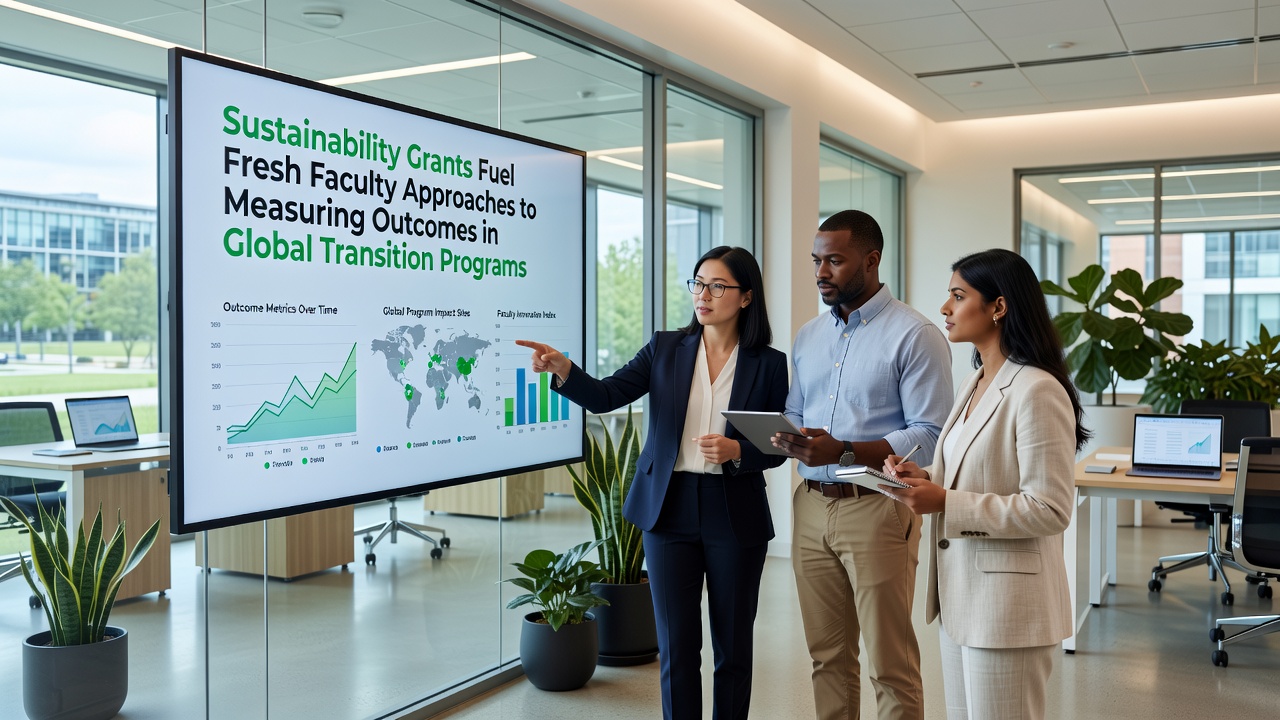
Faculty members also began linking outcome measurements to career trajectory data supplied by partner employers, and this integration reveals whether sustainability competencies developed during transition programs translate into workplace practices. Australian research teams published initial datasets demonstrating that graduates from grant-funded cohorts secured positions in organizations with verified environmental certifications at higher rates than control groups. The approach requires careful attention to privacy standards and data-sharing agreements, yet the resulting insights help programs adjust curricula to emphasize skills with documented long-term value.
Challenges in Scaling New Evaluation Models
Despite the momentum, faculty report ongoing difficulties in standardizing metrics across diverse cultural contexts, and language barriers sometimes complicate the collection of comparable self-reported data from international participants. Grant administrators have addressed part of this issue by requiring open-source toolkits that partner institutions can localize, and training modules now include modules on culturally responsive survey design. Evidence from pilot sites indicates that programs adopting these adapted tools maintain higher response rates from students and partners alike, while preserving the integrity of cross-site comparisons.
Future Directions Supported by Ongoing Funding
Additional grant rounds scheduled through 2027 will focus on artificial intelligence applications for predictive outcome modeling, and early proposals already explore how machine learning can forecast which interventions most effectively boost both academic success and sustainability engagement. Institutions in South America and Africa have joined existing consortia, expanding the geographic scope of data pools and introducing variables related to regional climate resilience. According to reports from the OECD education directorate, these expanded datasets will support more robust statistical validation of current measurement approaches over the next several years.
Conclusion
Sustainability grants continue to reshape faculty strategies for assessing global transition programs by supplying the resources needed for sophisticated, multi-dimensional evaluation systems. Institutions that have adopted these approaches now generate evidence linking educational interventions directly to environmental and social outcomes, and the resulting frameworks offer templates that other programs can adopt or modify. Continued investment in October 2026 and beyond will determine how widely these methods spread and how effectively they inform policy decisions at regional and international levels.